

Okay, so check this out—I’ve been juggling browser wallets for years now, and somethin’ about Rabby kept pulling me back. Wow! It’s fast, and the UI doesn’t try to be cute. At first glance it looks like another extension. But then you poke around and realize it was built with traders and power users in mind, not just beginners. My instinct said: this might be the one to replace three different workflows I had patched together with other wallets.
Whoa! The setup is straightforward enough that you can get started in minutes. Seriously? Yes. But hold up—there are subtle defaults and UX choices that matter. Initially I thought it was just a prettier Metamask clone, but actually, wait—there’s more depth under the hood, and some features that save me time and prevent dumb mistakes. On one hand the surface simplicity is nice; on the other hand, the advanced controls give you real control when you need it.
Here’s what bugs me about a lot of browser wallets: they either assume everyone is a novice or they throw a million techy toggles at you. Rabby sits in the sweet spot. Hmm… I like that. The transaction confirmation flow shows granular fee estimates and origin of token approvals, so you can avoid accidental approvals that drain funds. And yes, it supports multiple chains out of the box, so you don’t need to juggle separate extensions for different networks.
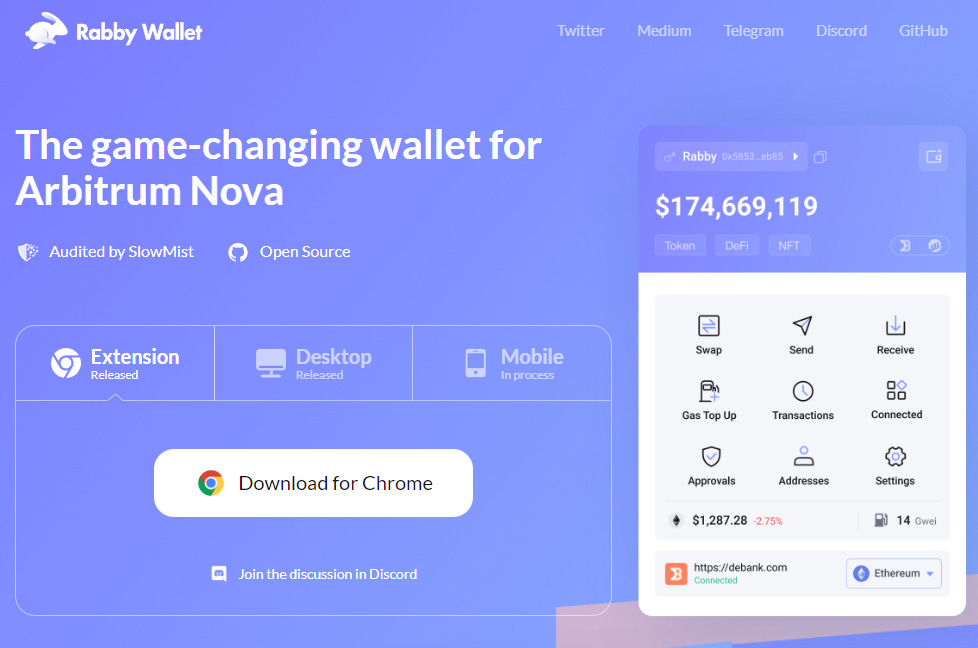
First impressions and the small things that matter
Quick note: I prefer wallets that reduce friction without hiding risk. Whoa! Rabby does that with permission grouping and granular approval revocation in a way that’s actually usable. The interface gives you a snapshot of which dapps have standing approvals, and you can revoke them in a couple clicks. That matters when you’re moving between Uniswap-like swaps, lending platforms, and smaller experimental contracts where one sloppy approval can cost you dearly.
On the security side Rabby is a browser extension that behaves like one. It stores keys locally and integrates with hardware wallets like Ledger for signing, which is a must for greater security. I’m biased, but hardware integration feels like non-negotiable for any serious DeFi user—especially given the rise of social engineering attacks. Something felt off about wallets that downplay those integrations. Rabby doesn’t. It gives you both convenience and a path to hardened security without making you jump through a dozen hoops.
Where to get Rabby and how to install
If you’re ready to try it, there’s a straightforward download and installation process that I use myself. Check it out—this link covers the basic steps and download options so you can follow along: https://sites.google.com/cryptowalletextensionus.com/rabby-wallet-download/ Wow!
Install, create or import your seed, and then pause—really pause—and write down your seed words. Seriously. Too many people race through that step. Rabby gives an easy seed import and hardware connect flow, and once you’re in you can set network preferences and gas defaults to match your trading habits. For example, if you use layer-2s a lot you can prioritize them in the network selector to avoid accidental mainnet gas surprises.
Okay, here’s the thing. If you’re coming from a wallet that auto-approves tokens or lumps approvals together, Rabby’s clarity will feel like a breath of fresh air. It breaks approvals down by contract and provides warnings when a dapp requests unusually broad permissions. That extra context is useful when interacting with lesser-known projects.
Features I actually use (and why they matter)
Short story: I use Rabby for day-to-day swapping, managing approvals, and as the signing layer when I connect my Ledger. Whoa! The multi-account experience is clean too; switching wallets doesn’t feel like toggling profiles in a messy settings panel. There are deep UX choices here that cut down on careless mistakes—small stuff that, over time, saves money and frustration.
Transaction simulation is one of those features that sounds fancy but becomes indispensable. Rabby shows you likely outcomes for swaps and can warn you about failed transactions before you commit. On one trade I caught a slippage mismatch that would have cost me an extra percent—small, but in crypto that adds up. On the other hand, sometimes simulations are conservative, though actually, wait—I’d rather have a false alarm than lose funds to an underestimation.
Another practical perk: bulk approval revocation. If you’ve approved a hundred contracts over time, having a sane interface to audit and revoke them is liberating. It reduces the attack surface from “all these forgotten approvals” to “only the dapps I actively use.” And yeah, sometimes I leave an approval by accident—I’m human—but Rabby makes cleanup painless.
How Rabby fits into a secure browser-wallet workflow
Here’s a sample workflow I use, and you can adapt it. First, create a dedicated browser profile for DeFi activity—keep tabs and extensions compartmentalized. Whoa! Next, use Rabby as your daily signing wallet but pair it with a Ledger for high-value moves. That way you get the speed of an extension and the safety of a hardware key. Sounds obvious, but many folks skip the Ledger pairing because of friction. Rabby reduces that friction without sacrificing the extra security layer.
Then, set conservative gas defaults and enable prompts that show contract source and approval scope. My instinct said “low gas saves money,” but then I realized paying a few cents more to secure a trade is worth it, especially when the network is volatile and mempool dynamics get weird. On one hand you want cheap transactions; though actually—if you set gas too low you risk stuck transactions that cause a cascade of issues.
Pro tip: treat Rabby like your command center. Use it to audit dapps before you connect. If a dapp asks for full spend allowance on a token you seldom trade, ask why. Often the reason is convenience, not necessity. Rabby’s UI helps you make those calls without needing to read raw contract code—although if you’re able to read bytecode, more power to you.
Limitations and things that bug me
I’ll be honest—no wallet is perfect. Whoa! Rabby has occasional edge-case bugs when new networks or token standards pop up. Sometimes UI labels are cryptic for less-technical users. On one occasion I had to re-open the extension to refresh a pending transaction’s status. Slightly annoying. But in the space of browser wallets it’s one of the more actively maintained and community-driven projects I’ve seen, which matters when bugs crop up.
Also, some DeFi power users might want even deeper automation or scripting that goes beyond what an extension comfortably supports. If you’re building bots or complex execution layers, you’ll still rely on separate tooling. Rabby is great for human-in-the-loop trading and everyday security hygiene, but it’s not a replacement for backend or programmatic signing in a high-frequency setup.
Common questions about Rabby
Is Rabby safe to use with Ledger?
Yes. Rabby supports Ledger hardware signing, which is a recommended setup for securing high-value assets. Pairing your Ledger with Rabby keeps private keys offline while letting you use the extension’s UX for confirmations and approvals.
What makes Rabby different from other browser wallets?
Rabby emphasizes permission clarity, granular approval management, and practical features like transaction simulation that reduce user error. It’s designed with both beginners and advanced DeFi users in mind, so the interface balances simplicity with powerful controls.
Can I use Rabby on multiple chains?
Definitely. Rabby supports many EVM-compatible networks and layer-2s. You can prioritize networks in the interface and manage assets across them without switching extensions, which keeps your workflow smoother.